WELCOME TO LAB-ELITE

  • Home
  • Services
    • Concrete & Cement Testing
    • Aggregate & Water Testing
    • Mining & Metallurgical
    • Materials Investigation
  • Capabilities
    • Instrumentation
    • Industries
  • Standards & Methods
    • ASTM C114
    • ASTM C1152
    • ASTM C1324
    • ASTM D3042
    • ASTM D4972
    • AASHTO T288
    • CSA A23.2-8B
    • CSA A23.2-15A
    • AWWA C105
    • IEEE STD 81
    • ASTM D4373
  • Price List
  • Request a Quote
  • FR
  • More
    • Home
    • Services
      • Concrete & Cement Testing
      • Aggregate & Water Testing
      • Mining & Metallurgical
      • Materials Investigation
    • Capabilities
      • Instrumentation
      • Industries
    • Standards & Methods
      • ASTM C114
      • ASTM C1152
      • ASTM C1324
      • ASTM D3042
      • ASTM D4972
      • AASHTO T288
      • CSA A23.2-8B
      • CSA A23.2-15A
      • AWWA C105
      • IEEE STD 81
      • ASTM D4373
    • Price List
    • Request a Quote
    • FR
  • Home
  • Services
    • Concrete & Cement Testing
    • Aggregate & Water Testing
    • Mining & Metallurgical
    • Materials Investigation
  • Capabilities
    • Instrumentation
    • Industries
  • Standards & Methods
    • ASTM C114
    • ASTM C1152
    • ASTM C1324
    • ASTM D3042
    • ASTM D4972
    • AASHTO T288
    • CSA A23.2-8B
    • CSA A23.2-15A
    • AWWA C105
    • IEEE STD 81
    • ASTM D4373
  • Price List
  • Request a Quote
  • FR

AASHTO T288

AASHTO T288 MINIMUM LABORATORY SOIL RESISTIVITY

Lab-Elite provides AASHTO T288 minimum laboratory soil resistivity testing throughout Quebec and Canada.

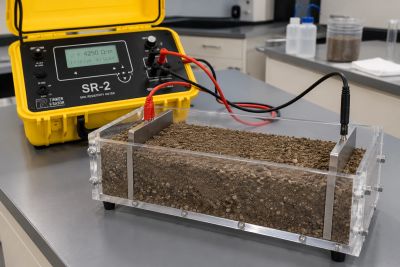
AASHTO T288 determines the minimum electrical resistivity of soil under controlled laboratory conditions. The principal use of the test is to evaluate soil corrosivity and identify conditions that may accelerate corrosion of buried metallic infrastructure.

Testing involves preparing the soil sample and measuring its resistivity at progressively increasing moisture contents until the minimum resistivity is established.

Our laboratory provides controlled sample preparation and resistivity measurements to support corrosion assessments, geotechnical investigations and infrastructure durability evaluations.

AASHTO T288 testing is commonly used for:

• Soil corrosivity assessments
• Buried metallic infrastructure investigations
• Pipeline and utility projects
• Culvert and drainage infrastructure
• Geotechnical investigations
• Material and soil characterization
WHAT IS AASHTO T288?

AASHTO T288 is a laboratory procedure used to determine the minimum resistivity that a soil may exhibit under varying moisture conditions.

The standard is specifically designed to identify the lowest resistivity condition likely to occur within a soil sample because this condition is often associated with the highest corrosion potential. 

The method involves:

  • sample preparation 
  • particle size reduction 
  • controlled moisture additions 
  • repeated resistivity measurements 

The lowest measured resistivity value is reported as the minimum soil resistivity.

WHY MINIMUM SOIL RESISTIVITY MATTERS

Electrical resistivity is one of the most widely used indicators of soil corrosivity.

Generally speaking:

Lower Resistivity

Often indicates:

  • increased ionic conductivity 
  • greater moisture availability 
  • higher corrosion potential 

Higher Resistivity

Often indicates:

  • lower conductivity 
  • reduced corrosion activity 
  • less aggressive soil conditions 

For this reason, minimum soil resistivity is commonly used as a screening tool during corrosion investigations.

CORROSION OF BURIED INFRASTRUCTURE

Corrosion can significantly reduce the service life of buried metallic assets.

AASHTO T288 testing may support evaluations involving:

  • steel pipelines 
  • ductile iron pipes 
  • water mains 
  • transmission towers 
  • grounding conductors 
  • underground storage systems 
  • buried steel foundations 
  • utility infrastructure 

Understanding soil resistivity helps engineers identify environments that may accelerate corrosion.

SOIL CORROSIVITY INVESTIGATIONS

Soil resistivity is frequently evaluated together with other corrosion-related parameters.

A comprehensive corrosivity assessment may include:

  • electrical resistivity 
  • pH 
  • soluble chlorides 
  • soluble sulfates 
  • moisture content 
  • redox potential 

Together, these parameters provide a more complete understanding of the aggressiveness of a soil environment.

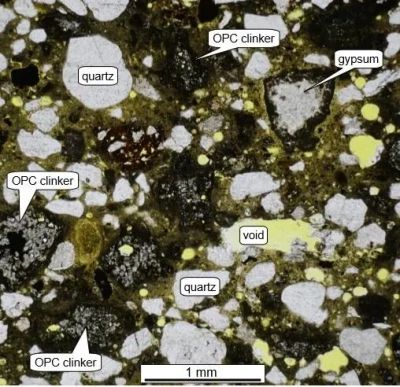
Example of  chloride material exposure

WHY DOES AASHTO T288 SEEK THE MINIMUM RESISTIVITY?

Unlike a simple field resistivity measurement, AASHTO T288 progressively increases the moisture content of the sample until the lowest resistivity value is identified.

The standard recognizes that the most corrosive condition may not occur at the natural moisture content observed at the time of sampling.

By identifying the minimum resistivity condition, engineers can evaluate the worst-case corrosion potential of the material.

MATERIALS COMMONLY TESTED

LAB-ELITE performs AASHTO T288 testing on:

Natural Soils

  • clay soils 
  • silts 
  • sands 
  • glacial deposits 

Engineered Materials

  • structural fills 
  • backfills 
  • imported soils 

Granular Materials

  • crushed stone 
  • granular base materials 
  • engineered aggregate systems

AASHTO T288 FOR AGGREGATE AND BACKFILL QUALIFICATION

Although originally developed for soils, the methodology can also provide valuable information regarding the electrical behavior of aggregates and engineered backfill materials.

Applications may include:

  • utility installations 
  • buried infrastructure projects 
  • corrosion-sensitive environments 
  • specialty aggregate qualification 

This is where you can legitimately connect to your aggregate resistivity capability without overstating grounding applications.
OUR AASHTO T288 SERVICES

 At LAB-ELITE, AASHTO T288 projects may include:

  • minimum soil resistivity determination 
  • corrosivity evaluations 
  • aggregate resistivity testing 
  • backfill characterization 
  • infrastructure investigations 
  • corrosion-related studies 
  • engineering support 
  • geotechnical projects

COMMON APPLICATIONS

AASHTO T288 testing is frequently requested by:

  • geotechnical engineers 
  • corrosion engineers 
  • municipalities 
  • utility companies 
  • pipeline operators 
  • consulting engineers 
  • transportation agencies 
  • infrastructure owners 

Typical projects include:

  • buried utility installations 
  • pipeline corridors 
  • municipal infrastructure 
  • corrosion investigations 
  • soil characterization programs 
  • environmental and geotechnical studies

FAQ SECTION


What is AASHTO T288 used for?

AASHTO T288 is used to determine the minimum resistivity of soils and related materials to evaluate their potential corrosivity.

Why is minimum resistivity important?

Minimum resistivity is commonly used as an indicator of the most corrosive condition that a soil may exhibit.

Is AASHTO T288 a corrosion test?

It is not a direct corrosion test, but it is one of the most widely used indicators of soil corrosivity.

Can aggregates be tested?

Yes. Aggregates and engineered backfills can also be evaluated to characterize their electrical resistivity behavior.

Can AASHTO T288 be combined with chloride and sulfate testing?

Yes. Chlorides, sulfates and pH measurements are frequently evaluated together with resistivity during corrosion investigations.

Do you serve all of Quebec and Canada?

Yes. LAB-ELITE provides AASHTO T288 resistivity testing services throughout Quebec and Canada.

Find out more

AASHTO T288 Soil Corrosivity Testing for Buried Infrastructure

Soil resistivity is one of the most commonly used indicators when evaluating the potential corrosivity of soils surrounding buried metallic infrastructure.

AASHTO T288 provides a standardized laboratory procedure for determining the minimum resistivity that a soil may exhibit under varying moisture conditions. The resulting data can assist engineers and asset owners in evaluating environmental conditions that may contribute to corrosion of buried steel, ductile iron and other metallic infrastructure.

LAB-ELITE supports municipalities, utility companies, engineering consultants and infrastructure owners by providing reliable AASHTO T288 resistivity testing services for soils, aggregates and engineered backfills throughout Quebec and Canada.

Typical Applications

  • Buried pipelines 
  • Water mains 
  • Utility corridors 
  • Underground storage systems 
  • Steel foundations 
  • Transmission infrastructure 
  • Corrosion investigations 
  • Asset management programs

Electrical Resistivity Testing of Soils and Aggregates

Electrical resistivity testing provides valuable information regarding the conductive properties of soils, aggregates and engineered materials.

AASHTO T288 resistivity measurements are frequently used during geotechnical investigations, material qualification studies and infrastructure projects where electrical properties may influence long-term performance.

LAB-ELITE provides laboratory resistivity testing for:

  • Natural soils 
  • Engineered fills 
  • Crushed stone 
  • Granular materials 
  • Utility backfills 
  • Specialty aggregates 

Testing may be performed to support corrosion assessments, material characterization and engineering investigations.

Soil Resistivity, Corrosion Potential and Infrastructure Durability

Low soil resistivity values are often associated with environments that may accelerate corrosion of buried metallic infrastructure. For this reason, electrical resistivity testing is frequently performed together with:

  • Soil pH testing 
  • Soluble chloride analysis 
  • Soluble sulfate analysis 
  • Moisture content determination 
  • Geotechnical characterization 

Combining these parameters can provide a more comprehensive understanding of soil aggressiveness and long-term infrastructure durability.

LAB-ELITE offers integrated analytical testing programs to support corrosion assessments and infrastructure investigations.

Lab-Elite

230 Rue Bernard Belleau, Laval, Quebec H7V 4A9, Canada

450-686-0111

Copyright © 2020 Lab-Elite - All Rights Reserved.

Powered by

Cookie Policy

This website uses cookies. By continuing to use this site, you accept our use of cookies.

RefuseAccept & Close